- For Appointment:
- +91 63590 11009
- Chat on Whatsapp

Pancreatic cancer is treated by four different operations, and not every patient needs one. This page sorts them by where the tumour sits and how close it lies to the main blood vessels. It shows which cases suit the robot, which need open surgery, and which need chemotherapy first. Apollo Hospital, Bhat, Gandhinagar · Gota OPD, Ahmedabad.
Last updated: 11 October 2026
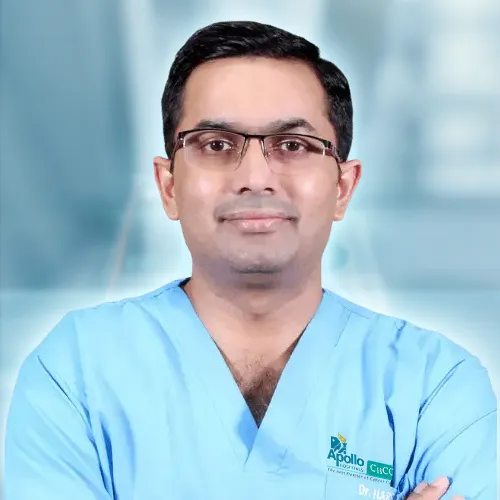
Dr Harsh Shah
MS, MCh (Surgical Gastroenterology), DrNB (Surgical Gastroenterology)
Robotic Cancer Surgeon (GI)
Apollo Hospital, Bhat, Gandhinagar · Gota OPD, Ahmedabad
★★★★★ Google: 4.9 from 53 reviews (Gota clinic) · 5.0 from 25 reviews (Apollo, Bhat)
Shah’s Gastro, Cancer & Robotic Surgery Centre. Two higher degrees in GI surgery and 18 years of experience in GI and cancer surgery. Every pancreatic cancer goes to the tumour board before treatment. Dr Harsh Shah performs the operation himself.
In short
Four operations treat this cancer, and the tumour’s place picks one. The head calls for a Whipple. The body or tail calls for removing that part with the spleen.
How close the tumour lies to the main blood vessels decides the order. A tumour clear of them is operated first. Others need chemotherapy before any operation.
The robot suits tumours clear of the main vessels. A vein repair, an artery in the way, or scarring after chemotherapy usually means open surgery is safer.
The pancreas has a head, a neck, a body and a tail. Each part lies against different vessels and drains to different nodes, so each needs its own operation.
| Where the tumour is | The operation | What is removed | Can it be robotic? |
|---|---|---|---|
| Head, the hook-shaped lower part, or around the bile duct opening. | Whipple operation. The lower stomach may be kept or removed. Both are equal for the cancer. | Head of the pancreas, the first part of the small bowel, the lower bile duct, the gallbladder and nearby nodes. | Yes, when the tumour is clear of the main vessels. |
| Body or tail. | Distal pancreatectomy with the spleen. | Body and tail, the spleen, and the nodes along the spleen’s vessels. | Yes, at a centre with experience. |
| Neck, the whole gland, or several spots. | Total pancreatectomy. | The whole pancreas, with the first part of the small bowel and the spleen. | Usually open. |
| Body, touching the main artery to the upper gut, in selected patients. | Distal pancreatectomy with that artery removed. | Body and tail, the spleen, and the artery. | Open, and only after a tumour board decision. |
Keeping the lower stomach or removing it gives the same result for the cancer. The surgeon chooses during the operation. A total pancreatectomy means lifelong diabetes that is hard to control. It also means enzyme capsules with every meal. That is discussed openly before it is chosen.
Find your tumour’s place and group in this table. Then open the page written for that operation. Each page explains one operation in full detail.
| Your situation | What usually happens | Read next |
|---|---|---|
| Head tumour, clear of the main vessels. | Robotic Whipple first. Chemotherapy after recovery. | Robotic Whipple, step by step |
| Body or tail tumour, clear of the main vessels. | Robotic distal pancreatectomy, worked from right to left. | Robotic distal pancreatectomy |
| Head tumour touching the main vein, or just touching an artery. | Chemotherapy first, then a new scan. Then a robotic or open Whipple. | Borderline tumour: robotic or open Whipple |
| Tumour wrapped around a main artery. | Chemotherapy for some months, then a new scan. Some become operable. | Operable after chemotherapy? |
| Spread to the liver, the lining of the abdomen or distant nodes. | No operation. Chemotherapy chosen by fitness. | Discussed at your consultation. |
The table is a guide, not a ruling. Your own group is set by the tumour board. The board reads a special pancreas scan, done in two phases with thin slices. A routine scan is not enough for this decision.
Every case goes to the tumour board before treatment. The board sorts the tumour into one of four groups. The group decides what comes first.
A scan after chemotherapy can look unchanged even when the tumour has responded. So the board also looks at the blood marker and at how well you are. A tumour that looks the same, with a falling marker in a well patient, may still be explored.
Some pancreatic cancers can be removed, but not safely through small ports. For them, open surgery is planned from the start. That is a safety choice.
| Situation | Usual approach | Why |
|---|---|---|
| Borderline tumour after chemotherapy. | Open by default. Robotic only in selected patients. | The vein may need repair. |
| Locally advanced tumour after chemotherapy. | Open. | Scar tissue sits around the arteries. Control of bleeding is surer by hand. |
| A very large head tumour. | Usually open. | There is less room to work safely. |
| A short patch repair of the main vein. | Robotic only in very experienced hands. Otherwise open. | Sewing a vein needs control at every stitch. |
| A longer piece of vein to replace, or any artery to remove. | Open. | These repairs are done by hand. |
| A liver artery that starts in an unusual place. | Robotic with care, using a dye that lights up arteries. Open if the map is unclear. | The artery must be seen and kept. |
| Severe obesity, or many past operations in the abdomen. | Decided case by case. Often open. | Working space and safe planes may be poor. |
| Long-standing inflammation of the pancreas around the tumour. | Open. | The tissue is hard and scarred. |
| Whole-gland operation, or removal of the main artery to the upper gut. | Open. | These are larger, specialist operations. |
None of these makes the operation less complete. The same tissue and nodes are removed. Only the way in changes.
Surgery helps only when all the cancer can be removed. If it has spread, or the body is too weak for a major operation, other treatment serves you better.
Spread to the liver or the lining of the abdomen is treated with chemotherapy. The drugs are chosen by fitness. A gene test is offered to every patient with this cancer. Some inherited gene changes alter which drugs work well. They also matter for brothers, sisters and children.
Fitness counts as much as the scan. Someone up and about most of the day can take full treatment. Someone in bed most of the day needs a gentler plan. For a patient too weak for any of it, comfort care comes first. Care for pain and symptoms starts early, alongside other treatment, not at the end.
Back pain from this cancer can be severe. A nerve block near the main artery can ease it. It is offered more often than people expect.
Sometimes small spots are hidden from the scan. That is why the robotic operation starts with a careful look inside. If spots are found, the operation stops there. A body or tail tumour, a large tumour or a very high marker makes this more likely. In those patients, the look may be done as a separate short step first.
The robot removes the same tissue as open surgery. It changes how the surgeon works: a steady 3D view, wristed instruments, and a dye that lights up arteries.
The pancreas sits deep, on top of the body’s main veins and arteries. Much of the work is fine dissection right next to them. The robot’s instruments bend at the tip like a wrist. The surgeon can work around a vessel without pulling on it.
Three steps gain the most. The first is freeing the artery that feeds the duodenum, before it is tied. The second is making a tunnel under the neck of the pancreas, over the main vein. The third is freeing the hook-shaped lower part from the main artery to the bowel. This last step is the hardest part of a Whipple.
The join between the pancreas and the bowel is the stitch that matters most after a Whipple. With wristed instruments it can be sewn almost as it is in open surgery. That is the main reason the robot is chosen over straight keyhole tools for this operation.
A dye given into a vein glows under the robot’s camera. Within seconds it shows the arteries, including an unusual liver artery. A few minutes later it shows the bile duct. For a body or tail tumour, the robot helps work from right to left. The margin is checked before the spleen is committed.
Some things do not change. The cut edges must be clear of tumour by at least one millimetre. A standard set of nodes is removed, not an extended one, because more adds harm without benefit. The edges of the pancreas and bile duct are checked under the microscope during the operation when they are close.
You lie on your back, tilted slightly head-up. Four small robotic ports and one helper port go across the upper abdomen. The first step is a careful look inside.
Your arms are tucked at your sides. The camera port sits just above the navel. One robotic arm holds the liver up out of the way for the whole operation. The robot is docked once the ports are in place.
The look inside checks the liver and the lining of the abdomen for small spots. If the cancer has spread, the operation stops. If not, the planned operation goes ahead.
The removed tissue comes out in a bag through a small cut low on the abdomen. Drains are placed beside the joins before the ports are closed. How each operation then runs, step by step, is on its own page in the table above.
All three remove the same tissue and the same nodes. They differ in the cut, the view, how the join is sewn, blood loss, and how soon you recover.
| Open | Keyhole | Robotic | |
|---|---|---|---|
| Cut. | A long cut across or down the abdomen. | Small ports and a small cut low down. | Small ports and a small cut low down. |
| View. | Direct. | Magnified, flat. | Magnified, 3D, steady. |
| Work next to large vessels. | By hand. | Straight tools, limited angles. | Wristed tools. |
| Sewing the pancreas join. | Standard. | Hard, slow. | Close to open. |
| Blood loss. | Higher. | Lower. | Lower. |
| Nodes removed. | The same. | The same. | The same. |
| Hospital stay and return to work. | Longest. | Shorter. | Shorter. |
| Need to switch to open. | Not needed. | More often. | Less often. |
| Cost. | Lowest. | Close to open. | Higher, for robotic tools. |
The figures for blood loss, stay and complications that apply to your own operation are given at the consent visit.
Switching to open surgery during the operation is a safety decision, not a failure. It is agreed at consent, and the team is ready for it.
Preparation starts at the first visit. Enzyme capsules, good food, daily walking and stopping smoking make the operation safer. Jaundice is not always stented first.
Enzyme capsules are started early if you have lost weight, have oily stools, or have a head tumour blocking the pancreas duct. They help you eat and keep weight on. A dietitian sees anyone losing weight fast or eating little.
Smoking and alcohol stop at least four weeks before. Daily walking builds strength. Jaundice can thin the blood, so vitamin K is given. Blood sugar is brought under control.
A tube to drain jaundice is not placed out of habit. If the operation is within about two weeks and you are well, it goes ahead without one. A stent is placed if there is infection, severe itching, kidney strain, a long wait, or chemotherapy first.
This cancer raises the risk of clots. Blood-thinning injections continue for four weeks after the operation. If the spleen is to come out, its vaccines are given before.
The day after surgery, fluid from the drain is tested for pancreatic juice. That one result decides how the first week runs and when the drains come out.
| When | What happens |
|---|---|
| Day of surgery. | Breathing tube out. Sitting out of bed. Clear fluids. The stomach tube is removed at the end of the operation. Drain fluid sent for testing. |
| Next day. | Drain test result reviewed. Free fluids and a light diet. Walking three times. Urine catheter out. |
| Second day. | Soft diet. Walking four times. Drip reduced. Tablets for pain. |
| Third day. | Drains out if the test was low and the fluid looks normal. Full soft diet. |
| Following days. | Diet builds up. The stomach may empty slowly at first. This is common and not a failure. |
| Going home. | Eating a soft diet with enzymes. No fever. Pain controlled by tablets. Walking alone. A written plan for sugar. |
Some signs need action the same day. Drain fluid that turns dark, bloody or cloudy. Fever, a fast pulse or new pain. Any small bleed from a drain or tube, even if you feel well. A small bleed can warn of a larger one, so it is treated as an emergency.
Most people need enzyme capsules with every meal after pancreatic surgery. Some develop diabetes. Without a spleen, vaccines and quick care for fever matter.
Enzyme capsules are taken with meals, not before and not after. Half a dose goes with snacks. If stools turn oily or weight falls, the dose is checked first. A low dose is the commonest fixable reason for decline.
Diabetes can start or get worse after a Whipple. After a total pancreatectomy it is certain. Blood sugar is checked at every visit. A new diabetic is referred for care.
After the spleen is removed, any fever needs quick medical review. Daily antibiotic tablets may be advised. Vaccines are kept up to date.
The tissue report is discussed at two weeks. Chemotherapy usually follows, ideally starting within eight to twelve weeks. Visits continue every three months for ten years.
The report gives the margins, the nodes and the final stage. Chemotherapy is chosen by how well you have recovered. Follow-up at this centre runs longer and more often than many guidelines, by Dr Harsh Shah’s decision.
| When | What is checked |
|---|---|
| Two weeks. | Wound, tissue report, chemotherapy referral, dietitian, enzyme dose, blood sugar. |
| Every three months for ten years. | Symptoms, weight, the CA 19-9 blood marker, blood counts, enzymes and sugar. |
| Scans. | CT every three to six months for two years. Then every six to twelve months up to five years. |
| Family. | Gene testing for relatives if an inherited change was found. |
★★★★★
“I had a truly positive experience with Dr. Harsh Shah. He is not only highly knowledgeable but also very compassionate and patient in explaining every detail. I underwent CRS HIPEC surgery under his care, and I couldn’t have asked for a better doctor. The entire process was smooth, and his expertise made a complex procedure feel manageable. Post-surgery recovery was well-monitored, and he was always available for any concerns. Highly recommend Dr. Harsh Shah for anyone needing advanced surgical oncology care.”
Akram Khan · Google review
★★★★★
“Excellent doctor for stomach cancer. We r very happy. Recommend for gastro cancer treatment in Ahmedabad”
Purshottam Meena · Google review
★★★★★
“Dr harsh operated my sister for liver cancer .we came for follow up .Now she is good. Thank u so much sir”
Natu Vadalia · Google review
Quoted exactly as written on the centre’s Google listings, from patients of Dr Harsh Shah treated for other abdominal cancers. No review on these listings yet names the pancreas. Below them, Dr Harsh Shah explains how head, body and tail tumours differ.
A robotic pancreatic operation costs more than an open one, because of the robotic tools. A longer stay or a complication also changes the total.
The office prepares a written estimate once the operation is decided. Cashless admission is arranged at Apollo Hospital, Bhat when your policy allows it. Allow a day or two for robotic approval. Ask whether your policy covers robotic surgery, and up to what limit. Bring the policy papers, photo identity, all reports with scans on disc, and your medicine list.
No. Tumours clear of the main vessels suit it. A vein repair, an artery in the way, scarring after chemotherapy or a whole-gland operation usually needs open surgery.
No. The same tissue, the same nodes and the same margin rules apply. Only the way in and the tools differ.
When the tumour touches the main vessels, chemotherapy first gives a better chance of clear margins. It also shows which cancers are spreading fast, before a large operation.
Most people do, with every meal. They are often started before the operation and the dose is checked at each visit.
The nodes along the spleen's vessels are part of the cancer field. Removing the spleen with them is the standard cancer operation.
Find your row in the table called Which page is yours, and open that operation's page.
Shah’s Gastro, Cancer & Robotic Surgery Centre, Gota, Ahmedabad
Consultation, review of scans and pathology reports, second opinions, follow-up and surveillance.
Google: 4.9 · 53 reviews
Apollo Hospital, Bhat, Gandhinagar
Admission, robotic and open surgery, and inpatient care.
Google: 5.0 · 25 reviews
Patients travel for pancreatic cancer surgery from across Gujarat, southern Rajasthan and western Madhya Pradesh.
Send the pancreas CT report, any biopsy report and recent blood reports ahead of your appointment, so the consultation starts with them already read. Which operation you need, whether chemotherapy comes first, and whether it is robotic or open, is decided at the consultation after examination, and by the tumour board. Call +91-63590-11009 WhatsApp the office
Swasth Parivar: twice a month, practical advice on recovery, diet and warning signs. No advertising. Stop any time.
Your number is used for these updates and for the clinic to reach you. It is never sold or passed on. To stop, reply STOP on WhatsApp.
