WhatsApp

Oncoplastic Breast Surgery and Reconstruction in Ahmedabad

Removing the cancer and keeping the shape of the breast, or rebuilding it after mastectomy, at Apollo Hospital, Bhat, Gandhinagar–Ahmedabad.

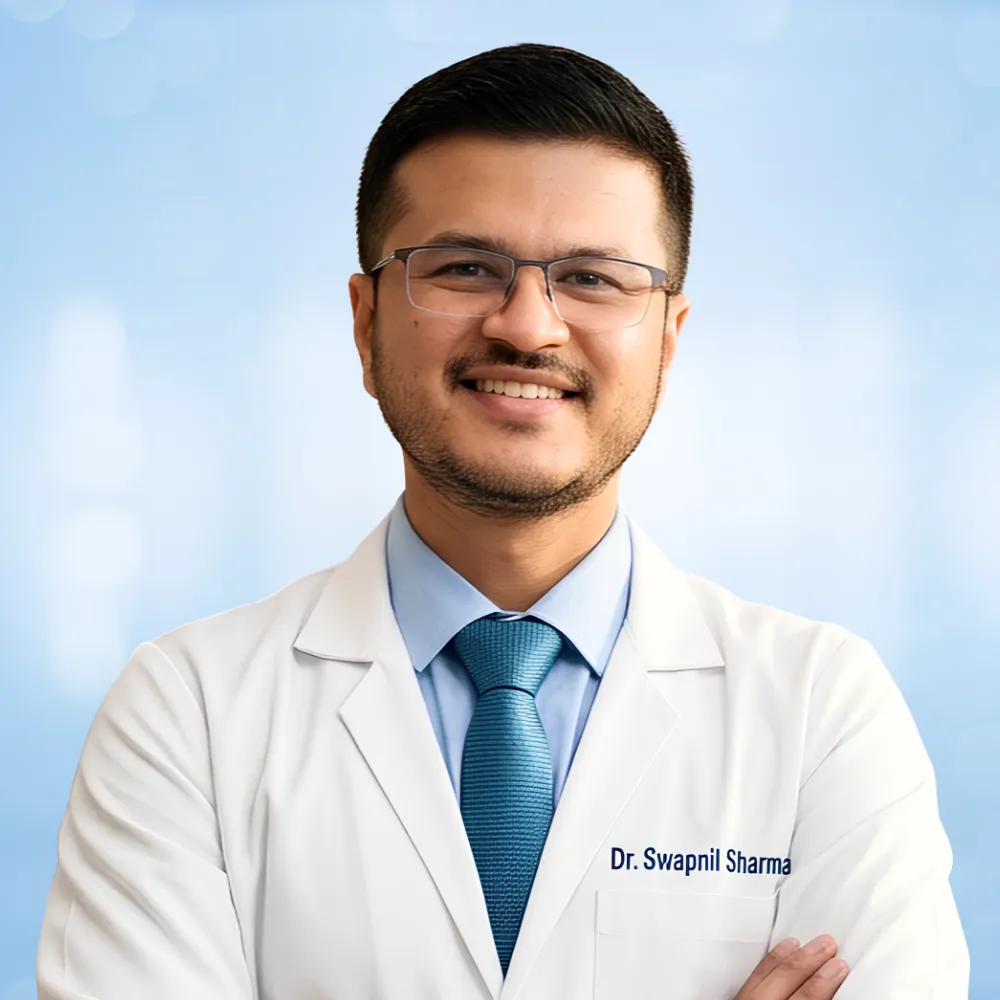
Dr Swapnil Sharma, Consultant Surgical Oncologist, Apollo Hospitals Ahmedabad

Oncoplastic breast surgery and breast reconstruction in Ahmedabad are carried out by Dr Swapnil Sharma, MS, FMAS, DrNB (Surgical Oncology), Consultant Surgical Oncologist, at Apollo Hospital International Ltd, Bhat, Gandhinagar. The same surgeon who does the cancer operation does the reshaping; neither is referred out.
Oncoplastic surgery removes the cancer and restores the shape of the breast in the same operation. Reconstruction builds a new breast shape after a mastectomy, with an implant or with your own tissue, at the same sitting or later. In both, the cancer operation comes first and is never compromised for the look.
Dr Swapnil Sharma, breast cancer surgeon, Apollo Hospital, Bhat

Shah’s Gastro, Cancer & Robotic Surgery Centre. Breast cancer treatment is planned with medical oncology, radiation oncology, radiology and pathology together; every case is discussed at the tumour board.

Dr Swapnil Sharma
MS, FMAS, DrNB (Surgical Oncology)
Consultant Surgical Oncologist, Apollo Bhat
Google rating 5.0, 25 reviews — Apollo, Bhat listing.
Reshaping while the cancer is removed

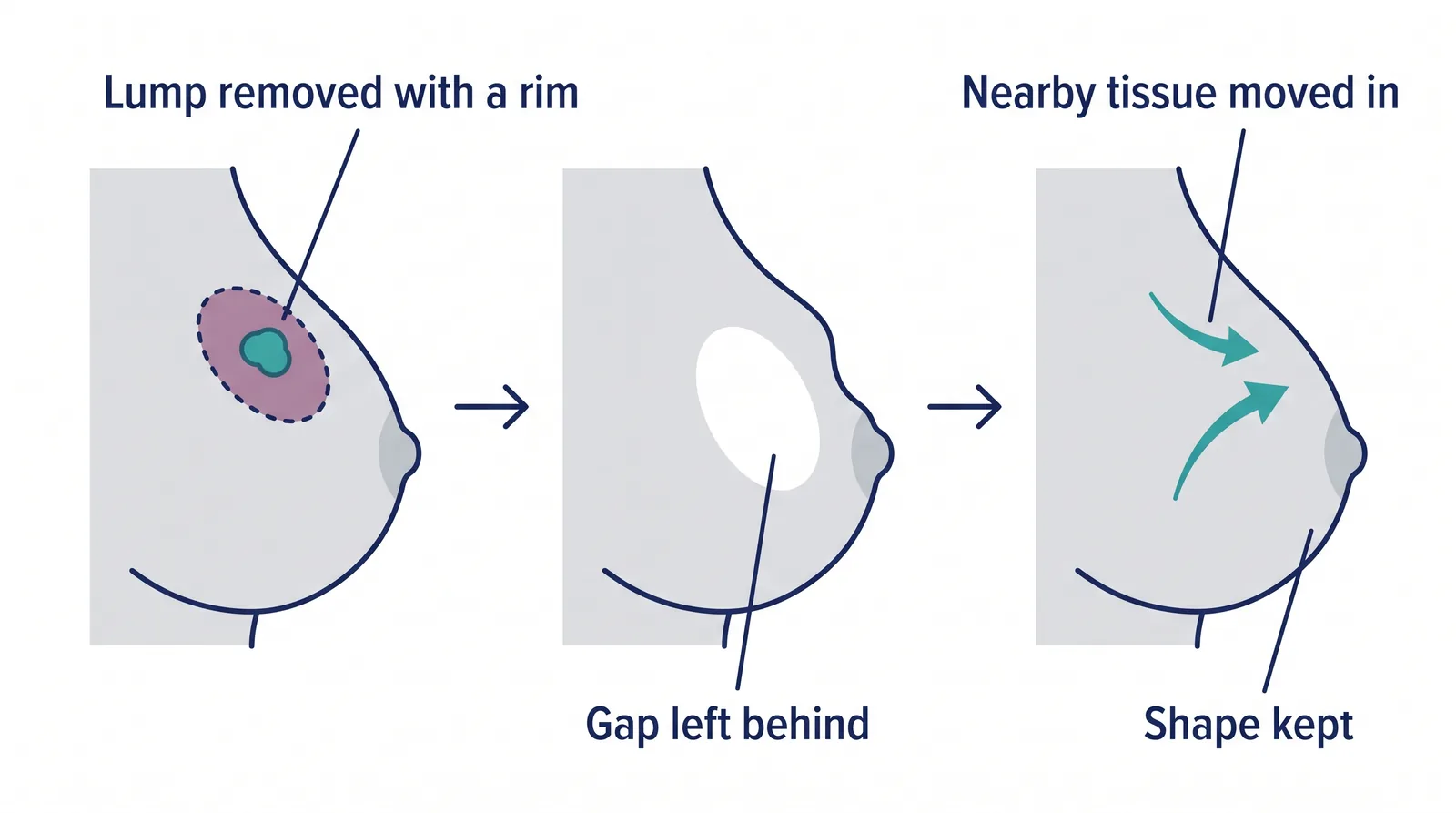
Removing a lump can leave a dent. Oncoplastic surgery moves the remaining breast tissue into that space so that the breast keeps an even shape.

In ordinary breast conservation, the lump is removed with a rim of normal tissue and the wound is closed. When the piece removed is small against the size of the breast, that works well. When it is large, or sits in a part of the breast where a gap shows easily — the lower half, or near the nipple — the result can be a visible hollow or a nipple pulled to one side.

Oncoplastic techniques prevent that. The remaining breast tissue is freed and moved to fill the gap, much as in a breast reduction or lift. The nipple is re-centred if needed. The skin is closed in a pattern that hides the scars as well as possible.

There is a second gain. Because the shape can be restored, a wider margin of normal tissue can be taken around the tumour. That lowers the chance of needing a second operation for close margins. Reshaping and clearance pull in the same direction.

Where the breast is large, the other breast may be reduced to match, at the same sitting or later. That is planned with you, never assumed.

Oncoplastic breast surgery in three steps: the lump is removed with a rim of normal tissue, a gap is left, and nearby breast tissue is moved in so the shape is kept
Oncoplastic surgery: the lump is removed with a rim of normal tissue, then nearby breast tissue is moved into the gap so the shape is kept.

Who benefits from oncoplastic surgery

  • Women having breast conservation where the piece to be removed is large compared with the breast.
  • Tumours in the lower half of the breast or close to the nipple, where a simple removal often leaves a visible dent or a displaced nipple.
  • Women with large or heavy breasts, for whom a reduction pattern removes the tumour and lightens the breast at the same time, and may make radiotherapy easier.
  • Women who would otherwise be offered a mastectomy only because of the expected shape after a lumpectomy.

It is not needed for every lumpectomy. A small lump in a larger breast is often removed with a simple closure and a good result.

Rebuilding after the breast is removed

Where the whole breast has to go, a new shape can be built with an implant or with tissue taken from your own body. Each has its own trade-offs, and radiotherapy plans often decide between them.

Swipe sideways to see the whole table.

ImplantYour own tissue
Operating timeShorterLonger
Second scar elsewhereNoYes, where the tissue is taken
How it feelsFirmerSofter, more natural
Changes with weight and ageNoYes, it ages with you
Hospital stay and recoveryShorterLonger
May need replacing years laterYesNo
After radiotherapyTolerated less wellUsually the steadier choice

Implants are placed under the skin, or under or over the chest muscle, often after a skin-sparing or nipple-sparing mastectomy. Sometimes a temporary expander is placed first and slowly filled over weeks before the final implant.

Your own tissue is most often a flap of muscle and skin from the back (the latissimus dorsi flap), moved round to the chest with its own blood supply, sometimes with an implant beneath it.

Radiotherapy changes the choice. Skin that has had radiotherapy tolerates an implant less well, so your own tissue is often the steadier answer there. This is worked out before surgery, with the radiation team.

Timing: at the same sitting, or later

Reconstruction can be done with the mastectomy or months afterwards. Both are offered here, and the treatment you still need often decides which.

Immediate reconstruction means one anaesthetic and one recovery, and you do not wake without a breast shape. It suits women who are unlikely to need radiotherapy afterwards, and those having a skin-sparing or nipple-sparing mastectomy.

Delayed reconstruction means the cancer treatment is finished and settled before any rebuilding begins. It suits women who are likely to need radiotherapy to the chest wall, and those who want time to decide.

When planned properly, neither route delays chemotherapy. Where mastectomy is the operation, the reconstruction question is raised before surgery, not after, because the two are planned together. Choosing not to rebuild is also a sound choice; an external prosthesis inside the bra restores the shape under clothes.

What to expect from the result

A reshaped or rebuilt breast is a good shape under clothes and in a swimsuit for most women. It is not the same as the breast before surgery, and it helps to know that in advance.

After oncoplastic reshaping, the breast is usually a little smaller and may sit slightly higher than before, and radiotherapy firms it further over the following months. Where the difference with the other side bothers you, the other breast can be adjusted later to match.

After reconstruction, the new breast has the shape of a breast but much less feeling, because the nerves to the skin are divided at the mastectomy. Some sensation returns over time; most of it does not. A rebuilt breast also does not change with arm movements in quite the way a natural breast does.

Scars fade over a year or more but do not disappear. Where possible they are placed where clothes cover them: under the breast, around the areola, at the side of the chest, or on the back.

The decisions are yours as well as the surgeon’s. Before the operation, you are asked what matters most — the size, keeping the nipple, avoiding a second scar, a quicker recovery — and the plan is shaped around that, within what is safe for the cancer.

How the choice is made

  • The cancer comes first. The size and position of the tumour, the margins needed and the armpit plan are settled before the reshaping is designed.
  • Radiotherapy. If radiotherapy is likely, implants are used more carefully and a delayed or own-tissue reconstruction may be advised.
  • Your build. Breast size and shape, the tissue available on the back, and general health all count. Smoking slows healing and is stopped well before surgery.
  • What you want. Some women want the closest possible match; others want the simplest operation and the quickest recovery. Both are reasonable.

Recovery

Recovery after reshaping alone is close to recovery after breast conservation surgery: a short stay, then a gradual return to light work over the following weeks.

Reconstruction asks more. An implant reconstruction recovers much like a mastectomy, with drains for some days. A flap from the back takes longer: a longer stay, a drain at the back as well as the front, and several weeks before you feel yourself again. The donor site is usually the part that takes longest to settle.

The final shape takes months to settle in every route. Judging the result in the first weeks is too early. A second, smaller operation to fine-tune the shape or to rebuild a nipple is sometimes planned once everything has healed.

The risks are discussed before consent: wound healing problems, fluid collections, infection, and with implants the possibility of firm scar tissue around the implant over time.

Your treatment, step by step

1
Book your consultation. Call to fix a time with Dr Swapnil Sharma at Apollo Hospital, Bhat. Bring the mammogram, ultrasound, biopsy report and any other scans.
2
Tests and treatment plan. Examination, a reading of every report, and photographs for planning with your consent. After the tumour board you are told which cancer operation is planned, and the reshaping or reconstruction options that suit it.
3
The surgery. The cancer operation, the node operation and the reshaping or reconstruction are done together under general anaesthesia, unless a delayed rebuild has been chosen.
4
A short hospital stay. The stay depends on the operation: short after reshaping, longer after a flap. You are shown how to care for the drains and the wounds before you leave.
5
Follow-up and full healing. The histopathology report decides whether radiotherapy, chemotherapy or hormone therapy follows. The shape is checked at each visit, and any fine-tuning is planned once healing is complete.

Cost, insurance and admission

The cost depends on the cancer operation, whether reshaping or reconstruction is added, the type of reconstruction, and the days in hospital. A written estimate is given before admission.
  • Cashless treatment through health insurance and TPAs is available at Apollo Hospital, Bhat; the insurance desk helps with pre-authorisation. See cashless insurance, CGHS and corporate panels.
  • CGHS and corporate panel patients are accepted. Bring your card and referral before admission.
  • Reconstruction after cancer surgery is part of cancer treatment. Ask the insurer, with the estimate in hand, how your policy treats implants and a later operation on the other breast.
  • At admission bring: identity proof, the insurance card or policy copy, every report and scan, and a list of your medicines. If you take a blood thinner, say so at the first visit.

Common questions

What does oncoplastic mean?

It means the cancer operation and the reshaping are planned as one. The tumour is removed with a clear margin, and the remaining breast tissue is moved to fill the gap at the same sitting.

Does reshaping make the cancer operation less thorough?

No. The cancer clearance is planned first and is never traded for appearance. Reshaping often allows a wider piece of tissue to be taken, because the shape can still be restored afterwards.

Implant or my own tissue?

An implant means a shorter operation and a quicker recovery. Your own tissue gives a softer result that changes with your weight and age, at the cost of a longer operation and a second scar where the tissue is taken.

Should reconstruction be done at the same time or later?

Both are offered. Doing it with the mastectomy means one anaesthetic and you wake with a breast shape. Doing it later lets you finish the cancer treatment first. Whether radiotherapy is likely often decides the timing.

Can the nipple be kept?

Sometimes. It depends on how far the tumour sits from the nipple and on what the scans show. Where it can be kept safely, it is kept; where it cannot, a nipple can be reconstructed later.

Does reconstruction hide a cancer coming back?

No. Follow-up examination and scans work as usual after reconstruction, and a recurrence is found in the same way it would be without it.

Who does the reconstruction?

Dr Swapnil Sharma performs the oncoplastic reshaping and the reconstruction himself, at Apollo Hospital International Ltd, Bhat, Gandhinagar. Call +91 63555 64601 to fix a time.

Related breast pages

The other parts of the breast service each have their own page.

Swipe sideways to see the whole table.

PageWhat it covers
Breast cancer surgery in AhmedabadThe whole breast service in one place: the operations, the order of treatment, and recovery.
Breast conservation surgery (lumpectomy)Removing the cancer and keeping the breast, followed by radiotherapy.
Mastectomy: simple and modified radicalRemoving the whole breast, with or without the armpit nodes.
Sentinel node biopsy and axillary surgeryHow the armpit nodes are checked, and when more of them need to come out.
Robotic-assisted mastectomy: who it suitsA hidden-scar nipple-sparing mastectomy for a small group of selected women.
Breast lump: when it needs checkingMost lumps are not cancer. How a lump is assessed, and when to see a surgeon.

Where Dr Swapnil Sharma sees patients and operates

Apollo Hospital International Ltd, Bhat — consultation and surgery
Plot No. 1A, GIDC Bhat, Industrial Estate, Gandhinagar, Gujarat 382428
Directions in Google Maps
Phone: +91 63555 64601 · WhatsApp

Last updated: 3 October 2026. Reviewed by Dr Swapnil Sharma, MS, FMAS, DrNB (Surgical Oncology), Consultant Surgical Oncologist.

This page is for information. It is not a substitute for an examination and a personal opinion.

Bring the mammogram, ultrasound and biopsy report to the first visit, and tell us what matters to you about the shape. Call to fix a time. Call +91 63555 64601 · Ask on WhatsApp

Rate this page

Get health updates from our surgeons on WhatsApp

Swasth Parivar: twice a month, practical advice on recovery, diet and warning signs. No advertising. Stop any time.

Your number is used for these updates and for the clinic to reach you. It is never sold or passed on. To stop, reply STOP on WhatsApp.

Robotic Cancer Surgery
Best robotic cancer surgery in Ahmedabad

Privacy Overview

This website uses cookies so that we can provide you with the best user experience possible. Cookie information is stored in your browser and performs functions such as recognising you when you return to our website and helping our team to understand which sections of the website you find most interesting and useful.