WhatsApp

CDH1 Gene Positive: Why a Preventive Robotic Gastrectomy?

Last updated: 19-Oct-2026

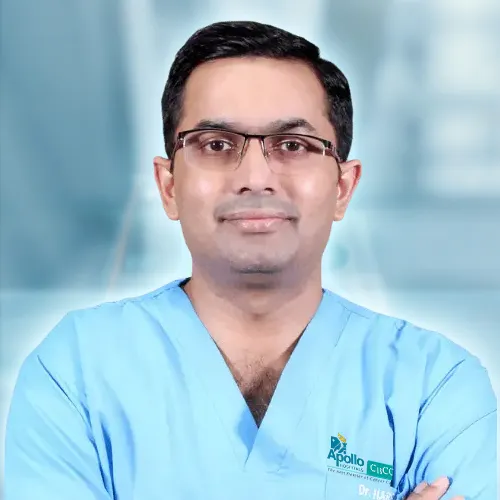
Dr Harsh Shah, robotic GI cancer surgeon, Ahmedabad

Dr Harsh Shah
MS, MCh (Surgical Gastroenterology), DrNB (Surgical Gastroenterology)
Registered with Gujarat Medical Council, Reg. No. G-38738
Robotic Cancer Surgeon (GI)
Apollo Hospital, Bhat, Gandhinagar · Gota OPD, Ahmedabad · 18 years of experience
★★★★★ Google: 4.9 from 53 reviews (Gota clinic) · 5.0 from 25 reviews (Apollo, Bhat)

In short

A CDH1 gene change runs in families with diffuse-type stomach cancer. Over a lifetime, the chance of that cancer is much higher than usual.

The cancer begins as tiny scattered patches in the stomach lining. An endoscopy misses most of them, so a clear scope is not an all-clear.

Removing the whole stomach before any cancer appears is the advised plan. It is not the cancer operation: the node clearance is deliberately smaller.

A preventive total gastrectomy uses the same operation as stomach cancer surgery, with a smaller node clearance. The full picture, from staging to choosing the approach, is on the main robotic stomach cancer surgery in Ahmedabad page.

What a CDH1 result means for the stomach

The CDH1 gene makes a protein that holds lining cells to each other. An inherited change loosens that hold. Families with the change see diffuse-type stomach cancer, often younger than usual. Doctors call this hereditary diffuse gastric cancer. A few families carry a change in CTNNA1 instead, and the approach is much the same.

Women who carry a CDH1 change also have a raised chance of one type of breast cancer, called lobular. Who should be tested, and how, is set out on the hereditary syndromes page linked at the end. This page starts where that one stops: the report is positive and nothing hurts.

Why a normal endoscopy is not an all-clear

The patches sit inside the lining and are only a few cells across. They raise no lump and do not change the colour. So the scope looks at a normal stomach and reports a normal stomach.

Before surgery, many random biopsies are taken from every part of the stomach. Even then only a small part of the lining is sampled. That endoscopy has one job: to rule out a cancer already growing. It cannot lower the inherited risk.

Endoscopic removal has no role here. It takes out one patch, and in this condition the patches are scattered across the whole stomach.

Who the operation is advised for

The advice follows the gene result, your age and your fitness for a major operation. A genetics doctor reviews the report before any surgical decision.

The gene result, and the usual advice
Your situationUsual advice
Confirmed change, aged twenty to forty, fit for surgery.Advised. This is the main reason for doing it.
Confirmed change, under twenty.Wait until twenty, with a yearly endoscopy meanwhile.
Confirmed change, over forty, endoscopy normal.Advised, and sooner, because the chance builds with age.
Confirmed change, older and with other illness.Case by case. Yearly checks are a reasonable choice.
A variant of uncertain significance.No operation. Close checks and family testing instead.
Family history only, no test done.Counselling and testing first, never surgery.
A cancer already found and causing symptoms.A different operation, with the full node clearance.

What is removed, and why the node clearance is smaller

The whole stomach comes out, from just below the food pipe to just beyond the outlet. The fat and lymph nodes lying right along the stomach come out with it. The deeper groups along the liver artery, around the main trunk and at the spleen are left alone. The spleen itself is kept.

The reason is simple. At this operation there is no cancer anyone can find, and lymph nodes are almost never involved. Clearing the deeper groups would add risk and could not add benefit. So the smaller clearance is planned on purpose.

Two operations that are not the same
PointPreventive operation for a CDH1 changeOperation for an established stomach cancer
Why it is doneA risk is removed before any cancer appears.A cancer that has been found is removed.
Lymph nodesOnly the groups lying along the stomach.A wider clearance, which surgeons call D2.
SpleenKept.Kept in almost every case.
ChemotherapyNot needed; the stage is the earliest there is.Often given before and after.

Where robotic surgery fits

People having this operation are usually young and otherwise well. Keyhole and robotic surgery are both the modern default for them, and the operation is the same either way.

The robot gives a steady, magnified, three-dimensional view and tools that bend like a wrist. That helps most at the join high under the diaphragm, where the space is tight. It does not change what is removed, and it does not change the decision to operate. Open surgery is chosen if a cancer is already established and bulky, or if earlier upper-abdominal surgery makes the keyhole route unsafe.

This is an uncommon operation. It is fair to ask how often your team does it, and whether a genetics clinic is part of the plan.

The new join, and the first days

The food pipe is joined to a loop of small bowel. Surgeons call this a Roux-en-Y join. A limb about forty to fifty centimetres long carries food down to where the bile and pancreatic juice enter, so those juices do not wash back to the food pipe. The cut end of the duodenum is closed.

  1. You sit up and walk on the first day.
  2. Sips of water start early, then free fluids.
  3. The drain comes out once the join has been checked.
  4. Small amounts of soft food begin before you go home.
  5. Most people go home in about six to eight days.
  6. A dietitian sees you before discharge, then at three, six and twelve months.

What the pathologist finds in a normal-looking stomach

The removed stomach usually looks entirely normal to the eye. It is cut into slices about five millimetres apart and read end to end. That full sectioning is the point of the pathology request.

Nearly every stomach removed for a confirmed CDH1 change already holds tiny patches of signet-ring cancer, sitting in the lining only. They are usually found in the upper, middle and lower stomach at once, which is why removing part of the stomach was never an option.

The stage comes back as the earliest there is, with no lymph nodes involved. No chemotherapy follows. That finding is the reason the operation was advised.

Eating, weight and what continues for life

You eat small amounts, more often. Some weight is lost over the first year and then settles, usually by six to twelve months. Sweet food or drink on an empty stomach can bring flushing, cramps and loose motion; a dietitian shows you how to avoid it.

Some things carry on for life and matter as much as the operation. Vitamin B12 cannot be absorbed without the stomach, so replacement is not optional.

What continues after the stomach is removed
WhatHow oftenWhy
Vitamin B12, by injection or a daily tablet.Monthly, or daily for the tablet.The stomach made the factor that absorbs it.
Iron studies, with replacement if they fall.Yearly.Iron is absorbed less well now.
Calcium with vitamin D.Daily.Absorption drops and bone needs both.
Endoscopy of the new join.Yearly.A small risk stays at the join.
Breast checks for women, mammogram with MRI from thirty.Yearly.Lobular breast cancer is commoner in carriers.
Testing offered to close relatives.Once, around your operation.Parents, brothers, sisters and children.

If you decline or delay, what yearly checks can do

Some people say no after counselling. Some delay, often a woman planning a pregnancy. Some are under twenty, and some are not fit for a major operation. All of them are offered a yearly endoscopy with many random biopsies.

Those checks find only a small share of early disease. When this cancer does show itself on a scope, it is often already advanced. They are a bridge, not a substitute.

That is said plainly at the time, and the decision is written down. It is revisited each year, because circumstances change.

Problems that can follow, named in words

Your own figures are discussed at the consent meeting.

  1. A leak at the join between the food pipe and the small bowel. This is the main serious problem.
  2. A leak from the closed end of the duodenum.
  3. A narrowing of the join, which is stretched open at endoscopy.
  4. A leak of pancreatic fluid, which is less likely without the deeper node clearance.
  5. Infection in the wound, or clots in the legs or the lungs.
  6. The sugar reaction after sweet food or drink.
  7. Weight loss, and low vitamin B12 or iron if replacement is not taken.
  8. Rarely, a cancer at the new join years later. That is why the yearly scope is done.

Questions to ask before you decide

  1. Is the change on my report a confirmed one, or uncertain?
  2. Has a genetics doctor gone through the report with me?
  3. Will the node clearance be the smaller one?
  4. Will the operation be robotic, keyhole or open, and why for me?
  5. Who will organise my vitamin B12, calcium and yearly checks, and who in my family should be tested?

Frequently asked questions

Can I just have regular endoscopies instead of the operation?

You can, and some people do. But the scattered patches are mostly invisible to a scope, so yearly checks miss early disease. They are a bridge, not a substitute.

Is this the same operation as for an established stomach cancer?

No. The stomach comes out in both. Here the node clearance is the smaller one, because there is no known cancer to clear, and no chemotherapy follows.

Will I be able to eat normally afterwards?

You eat small amounts more often. Most people settle into a routine within a few months. A dietitian plans it with you before you go home.

Does robotic surgery change the safety of this operation?

It gives a steady magnified view and wristed tools for the join near the diaphragm. What is removed does not change, and nor does the decision to operate.

Should my children and brothers and sisters be tested?

Each first-degree relative can be offered testing through a genetics clinic. That conversation usually starts at the time of your own operation.

Related pages

The inherited syndromes, and who should be tested, are covered on the hereditary GI cancer syndromes page. The operation for a stomach cancer already found is on the robotic total gastrectomy page. For questions before you travel, call +91-63590-11009.

Where Dr Harsh Shah sees patients and operates

Shah’s Gastro, Cancer & Robotic Surgery Centre, Gota, Ahmedabad

Consultation, review of the gene report, endoscopy and biopsy reports, second opinions and follow-up.

+91-63590-11009 · Directions to the Gota clinic

Apollo Hospital, Bhat, Gandhinagar

Admission, robotic and open surgery, and inpatient care.

+91-63590-11009 · Directions to Apollo, Bhat

Has a CDH1 gene report come back positive in your family? The gene report, the endoscopy report and the biopsy slides can be sent ahead on WhatsApp. The plan is decided at the consultation, after examination. Call +91-63590-11009 Send the gene report before the visit

Rate this post

Get health updates from our surgeons on WhatsApp

Swasth Parivar: every week, practical advice on recovery, diet and warning signs. No advertising. Stop any time.

Your number is used for these updates and for the clinic to reach you. It is never sold or passed on. To stop, reply STOP on WhatsApp.

Robotic Cancer Surgery
Robotic cancer surgery in Ahmedabad
Privacy Overview

This website uses cookies so that we can provide you with the best user experience possible. Cookie information is stored in your browser and performs functions such as recognising you when you return to our website and helping our team to understand which sections of the website you find most interesting and useful.