
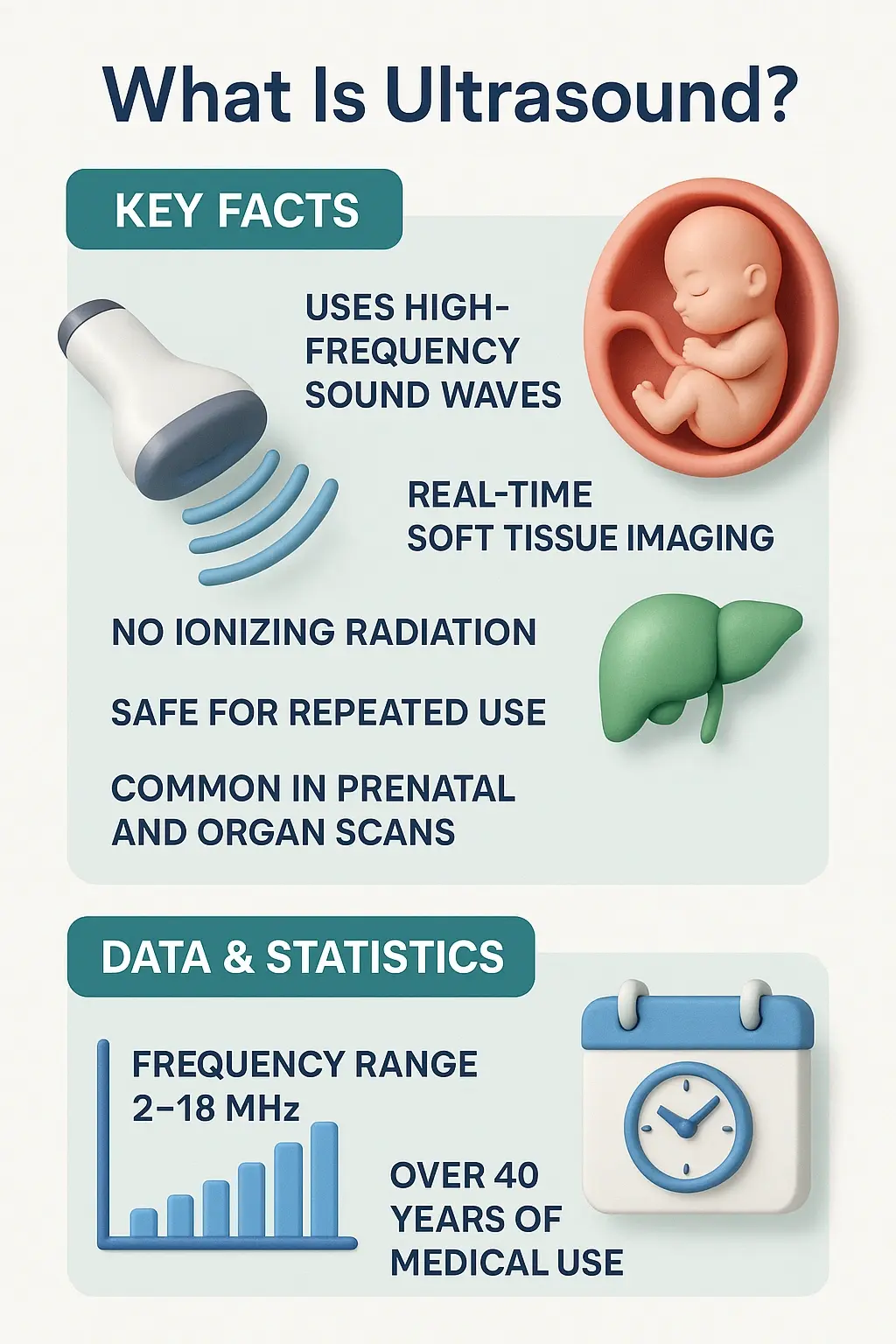
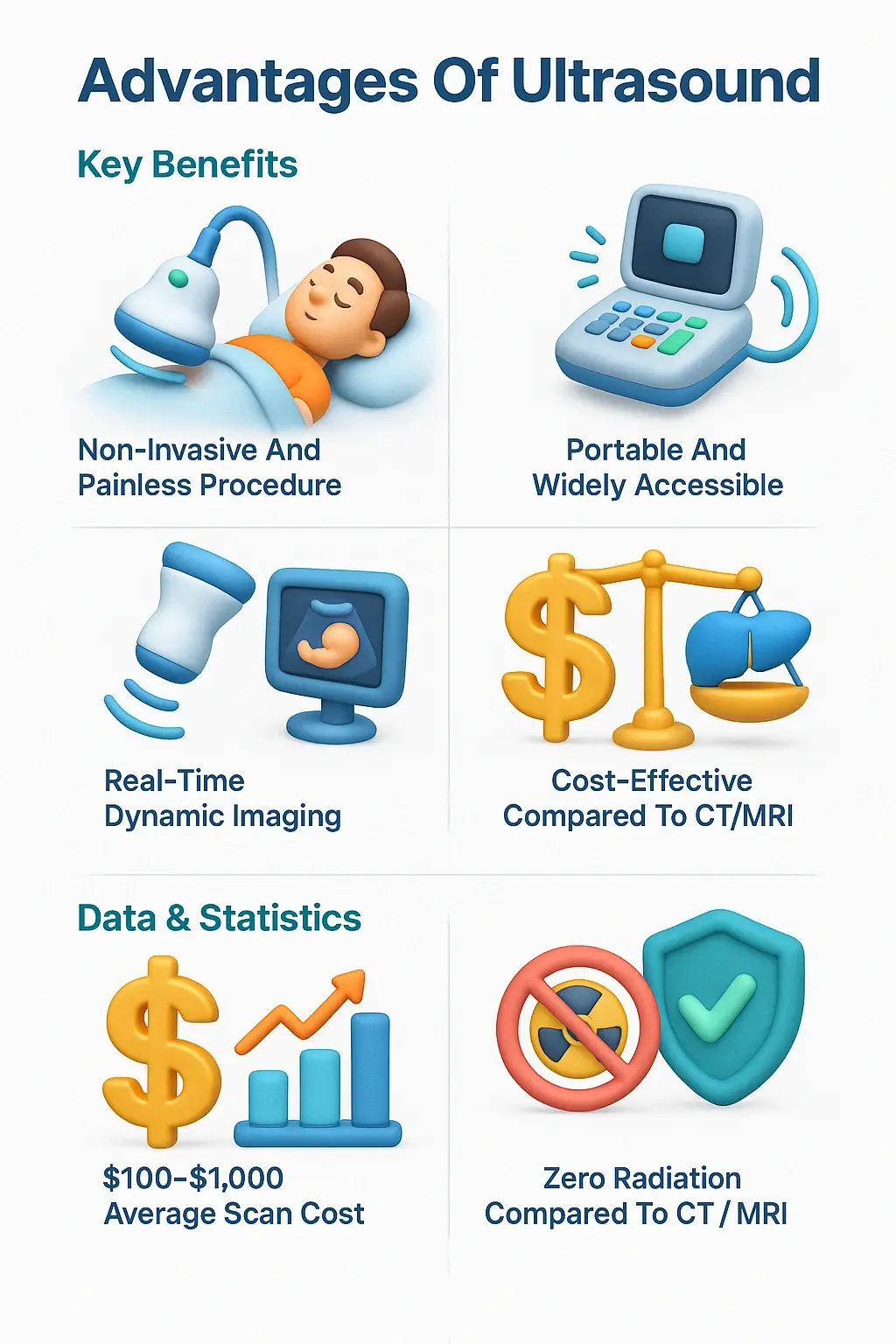
Ultrasound doesn’t use radiation, making it safer than X-rays or CT scans. It’s non-invasive, cost-effective, and quick — suitable for all age groups including children and pregnant women.
- For Appointment:
- +91 63590 11009
- Chat on Whatsapp

| Feature | Ultrasound | X-ray | MRI (Magnetic Resonance Imaging) |
|---|---|---|---|
| Technology Used | High-frequency sound waves | Ionizing radiation | Magnetic fields and radio waves |
| Best For | Soft tissues, organs, blood flow, pregnancy | Bones, teeth, chest (lungs) | Detailed images of soft tissues, brain, joints |
| Safety | Very safe, no radiation | Uses a small amount of radiation | Safe, no radiation, but not for people with certain metal implants |
| Procedure | A gel is applied, and a probe is moved over the skin | You stand or lie still for a quick image capture | You lie inside a large, tube-like machine for a longer period |
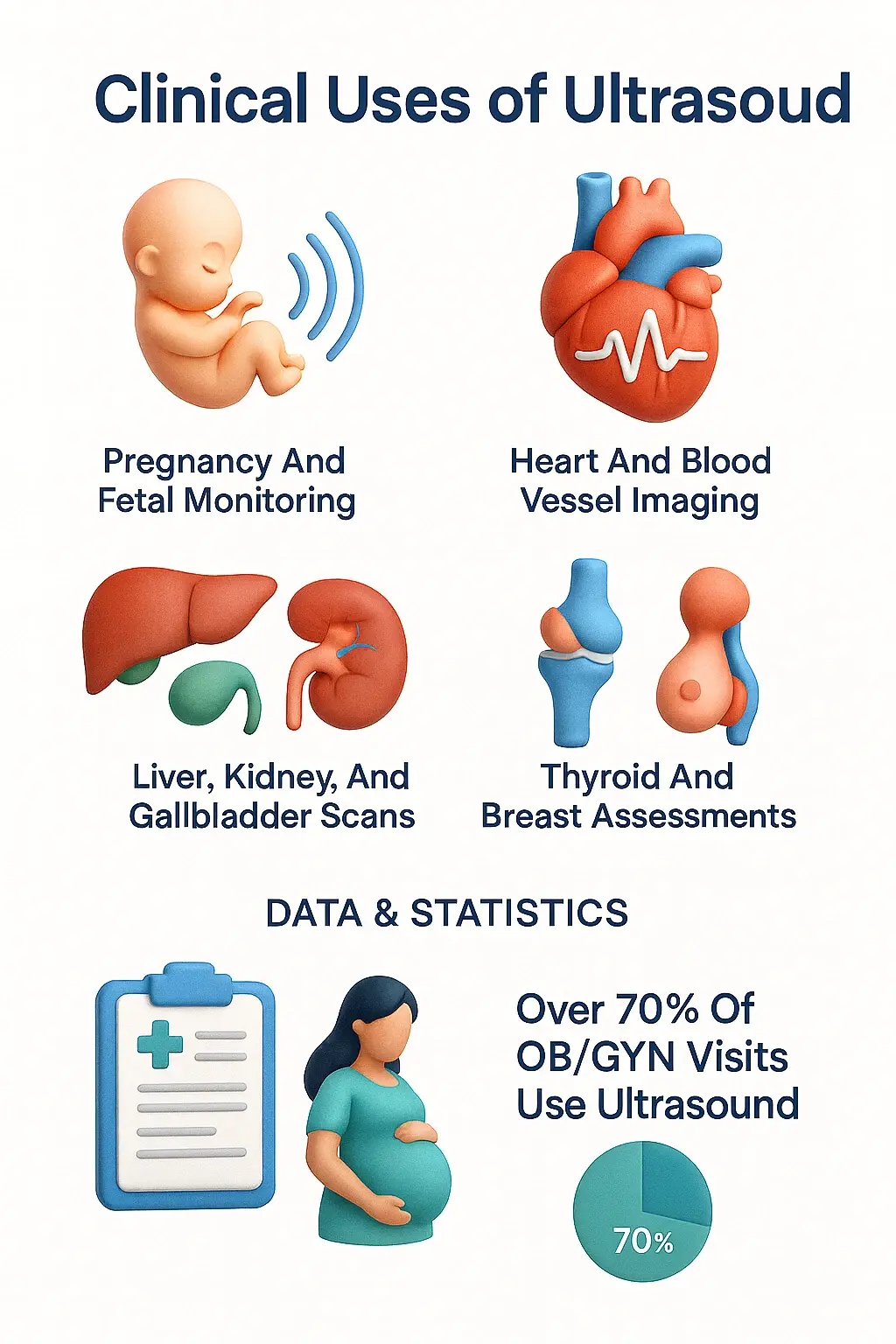
| Scan Name (Trimester) | When It's Done | Main Purpose |
|---|---|---|
| Viability Scan (First) | 6–9 weeks | To confirm pregnancy, check heartbeat, and determine the due date. |
| Nuchal Translucency (NT) Scan (First) | 11–14 weeks | To screen for chromosomal abnormalities like Down's syndrome. |
| Anomaly Scan / Level II (Second) | 18–20 weeks | A detailed check of the baby's anatomy, organs, and overall development. |
| Growth Scan (Third) | 28–36 weeks | To monitor the baby's growth, check fluid levels, and assess the placenta's health. |
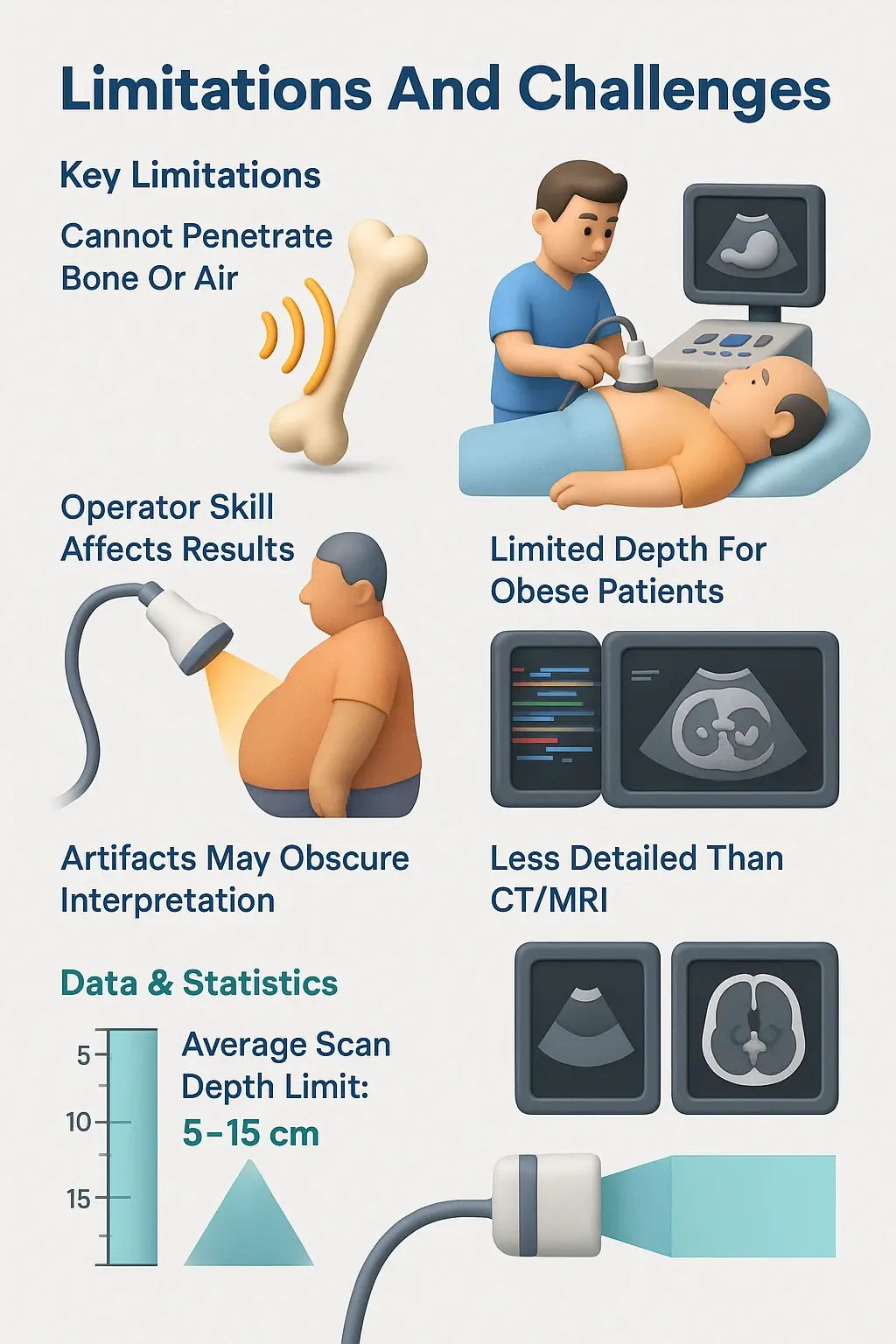
⦿ Fasting: For an abdominal scan (like one for the liver or gallbladder), you may be asked not to eat or drink for 6 to 8 hours before the test. This is because food and gas in your stomach and intestines can block the sound waves and make it hard to see the organs clearly.
⦿ Full Bladder: For a pelvic or early pregnancy scan, you will be asked to drink several glasses of water an hour before your appointment and not go to the toilet. A full bladder pushes the intestines out of the way, giving the sonographer a clear view of the uterus and ovaries.
| Type of Ultrasound Scan | Preparation Required | Why It's Needed |
|---|---|---|
| Abdominal (Liver, Gallbladder) | Fast for 6–8 hours. | To reduce gas and ensure a clear view of the abdominal organs. |
| Pelvic / Early Pregnancy | Drink 4–6 glasses of water 1 hour before and hold your urine. | A full bladder provides a "window" to see the uterus and ovaries clearly. |
| Kidney | You may be asked to have a full bladder. | A full bladder helps in visualizing the kidneys and bladder more effectively. |
| Musculoskeletal / Thyroid | No special preparation needed. | These areas are close to the skin and are not affected by food or a full bladder. |
⦿ Check-in: You will arrive at the clinic or hospital and register for your appointment.
⦿ Preparation: A nurse or ultrasound technician will take you to the scanning room. You may be asked to change into a gown.
⦿ Positioning: You will lie down on a comfortable examination table.
⦿ Gel Application: The technician will apply a special water-based ultrasound gel to your skin over the area to be examined. This gel helps the sound waves travel from the transducer into your body.
⦿ Scanning: The technician will press the transducer firmly against your skin and move it around to capture images from different angles. You will see the black-and-white images on a computer screen.
⦿ Completion: Once enough images are captured, the technician will wipe off the gel, and you can get dressed.
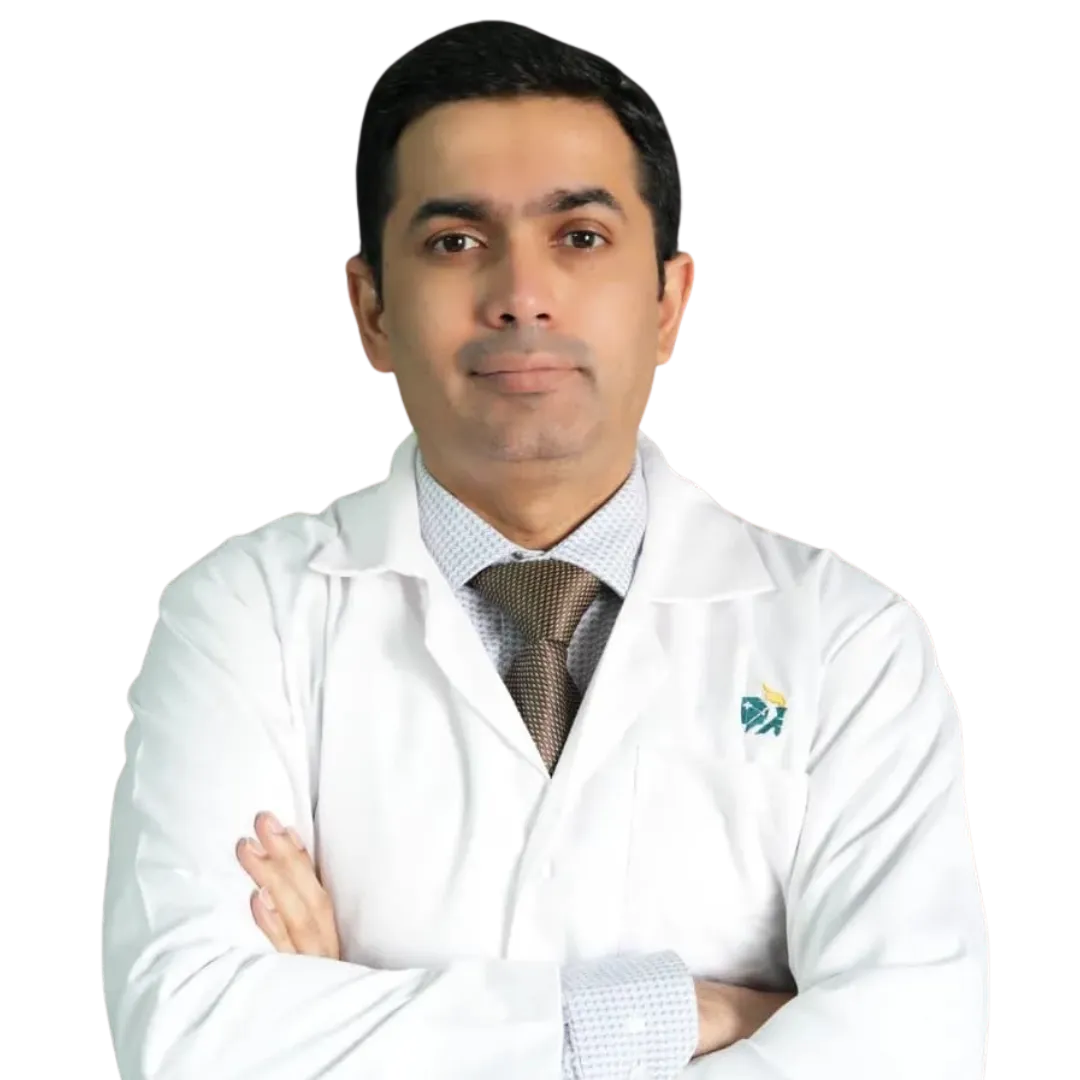
MS, MCh (G I cancer Surgeon)
Dr. Harsh Shah is a renowned GI and HPB Robotic Cancer Surgeon in Ahmedabad.
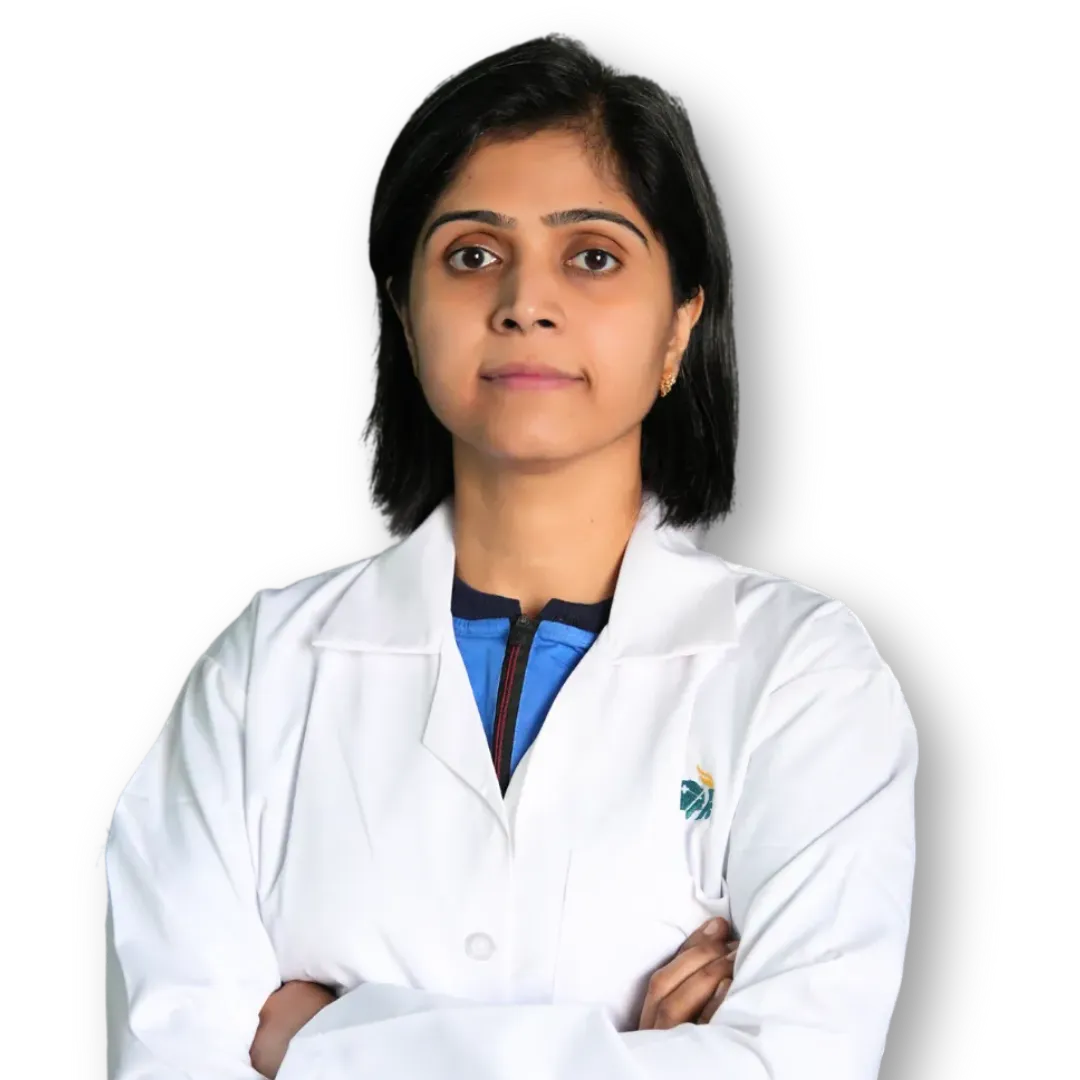
MS, DrNB (Surgical Oncology)
Dr. Swati Shah is a Robotic Uro and Gynecological Cancer Surgeon in Ahmedabad.
Swasth Parivar: twice a month, practical advice on recovery, diet and warning signs. No advertising. Stop any time.
Your number is used for these updates and for the clinic to reach you. It is never sold or passed on. To stop, reply STOP on WhatsApp.