
Robotic Liver Cancer Surgery in
Ahmedabad

-
Center of Excellence for Robotic Surgery
-
Management of all Liver Tumours
-
10+ years in Robotic Surgery
Cancer Survivors
International Patients
When it comes to liver cancer, choosing the right doctor is key to getting better treatment. In Ahmedabad, Dr. Harsh Shah is one of the best experts in this field. He’s a liver cancer surgeon with more than 15+ years of experience and provides robotic liver cancer surgery at an affordable cost. Dr. Shah has helped many patients beat their illnesses and get healthy again.
11750+ Patients
11750+ Patients have been successfully
treated
15+ Years
15+ years of work experience
as a liver cancer specialist
24 + Awards
24+ Awards received by Dr. Shah for his achievements

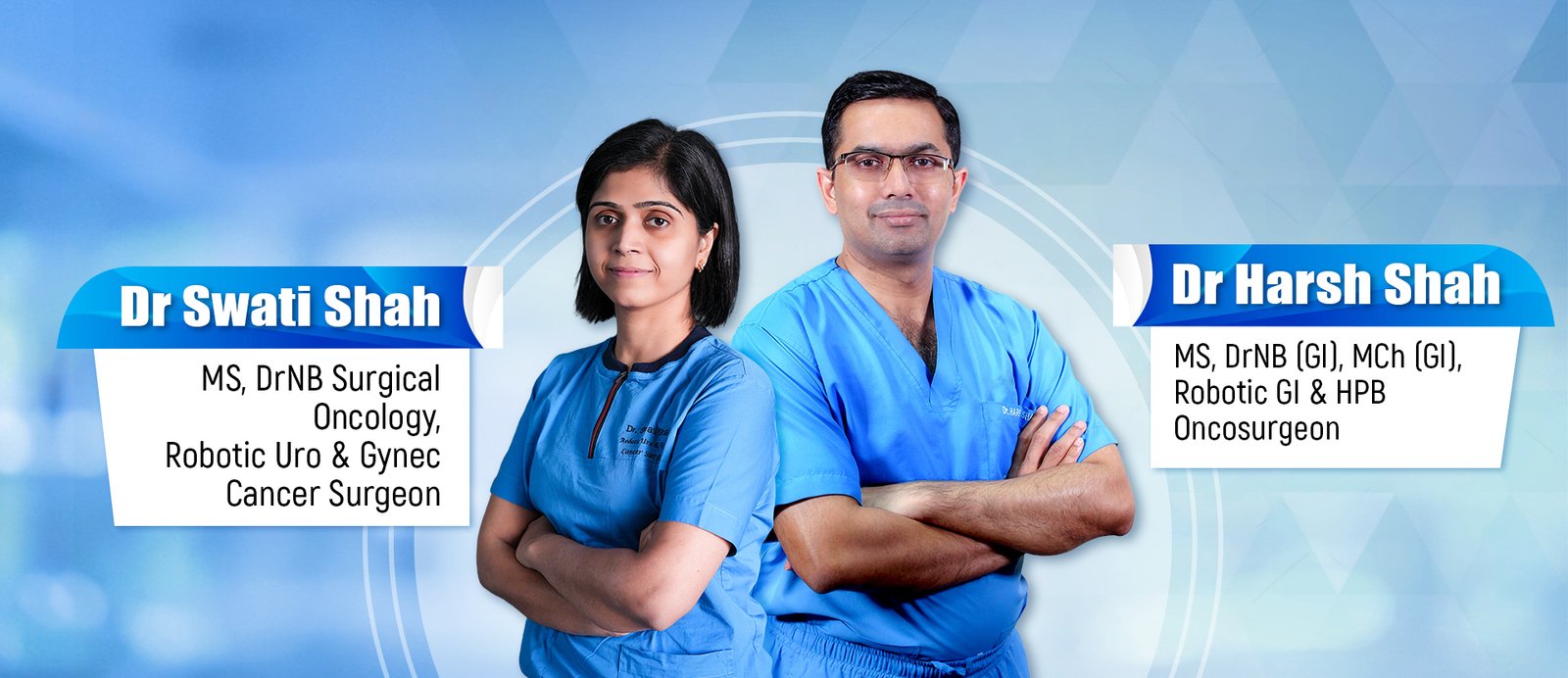
Dr. Harsh Shah
MS, DrNB(GI), MCh(GI)
Meet
Dr. Harsh Shah
-
Leading GI & HPB Robotic Cancer Surgeon in India -
15+ years of experience in treating various types of Gastrointestinal cancers -
Successfully treated many Liver cancer patients with Robotic surgery
Management of Liver cancer involves proper diagnosis & early treatment
Diagnosis is performed with CT scan, MRI, biopsy, AFP, CEA, & CA 19-9.
Treatment involves
Treatment involves surgery, chemotherapy, TACE, RFA & sometimes radiation.

What is liver cancer?
Liver cancer is a condition where malignant cells form in the tissues of the liver, a vital organ responsible for filtering blood, detoxifying harmful substances, and metabolizing drugs. The most common type is hepatocellular carcinoma (HCC), which originates in the liver’s main cells. Factors like chronic hepatitis infections, cirrhosis, alcohol abuse, and obesity can increase the risk of developing liver cancer.https://youtu.be/Ziq4o1HRHcAhttps://youtu.be/qVuCH9JIR4Q
Types
+ Symptoms
+ Diagnosis & Staging
+ Treatment
Types
There are two types of liver cancer. Primary & Secondary. Secondary liver(liver metastasis) cancer is more common. It means extension of tumour from either colon/rectum/breast etc. to the liver. Primary liver cancer are of 4 types.
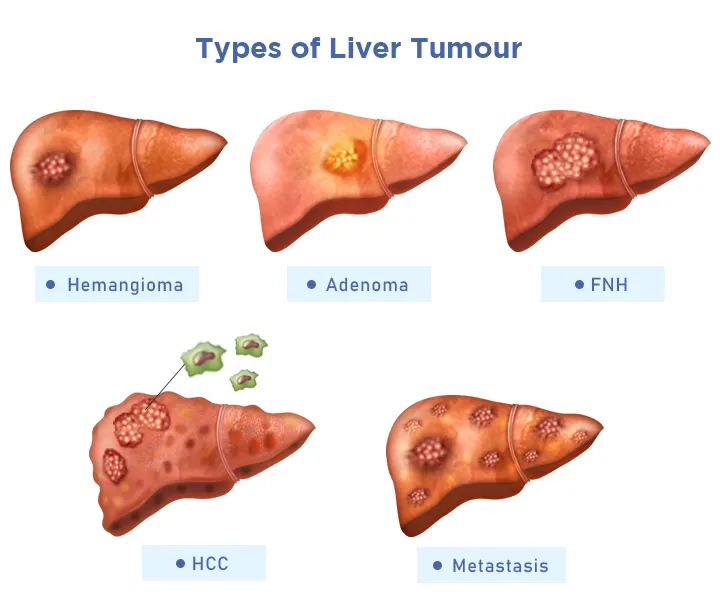
Hepatocellular carcinoma (HCC): This is the most common form of liver cancer, originating in the hepatocyte cells of the liver. It’s more likely to occur in individuals with chronic liver diseases, such as cirrhosis caused by hepatitis B or C infection or alcohol abuse.
Intrahepatic cholangiocarcinoma (bile duct cancer): Though much less common, this cancer starts in the cells lining the bile ducts of the liver. It’s more challenging to treat because it’s usually diagnosed at a later stage.
Liver angiosarcoma: This rare cancer begins in the blood vessels of the liver and grows very quickly, so it is often diagnosed at an advanced stage.
Hepatoblastoma: A very rare type of liver cancer, it’s almost exclusively seen in children, typically diagnosed before the age of 3.
+ Symptoms
Symptoms of Liver Cancer:

• Weight loss
• Upper abdominal pain
• Jaundice
• Fatigue
• Swelling in the abdomen
• Nausea
• Loss of appetite
+ Diagnosis & Staging
Diagnosing and staging liver cancer involves several key steps and tests, each of which provides essential information about the presence, extent, and nature of the cancer. Here’s how the tests you listed contribute to the process:
Blood AFP Level: Alpha-fetoprotein (AFP) is a protein that can be elevated in the blood of some patients with liver cancer, particularly hepatocellular carcinoma (HCC), the most common type of liver cancer. High levels of AFP can be suggestive of liver cancer, but not all liver cancers produce significant increases in AFP, and elevated AFP can sometimes occur in other conditions.
USG Abdomen (Ultrasound Scan): This is often the first imaging test used if liver cancer is suspected, primarily because it’s non-invasive, widely available, and relatively inexpensive. An ultrasound can help identify abnormal growths or tumors in the liver and guide further diagnostic procedures, such as biopsies.
PET-CT Scan: A PET-CT scan combines positron emission tomography (PET) and computed tomography (CT) imaging to produce more detailed images. This scan can show the metabolic activity of cells and detailed anatomy, helping to differentiate between benign and malignant lesions. It’s particularly useful in determining whether the cancer has spread (metastasized) beyond the liver to other parts of the body.
CT Scan: This scan provides detailed cross-sectional images of the body and is more detailed than an ultrasound. A CT scan can assess the number, size, and exact location of tumors in the liver, and it can also help evaluate whether the cancer has spread to nearby lymph nodes or other areas. Contrast-enhanced CT scans can provide additional detail by highlighting the vascular structures of the liver, which is important for surgical planning.
+ Treatment
Treatment options for liver cancer vary based on the stage of the disease, the overall health of the patient, the function of the liver, and other individual factors. Here’s how the treatments you listed are typically used in the management of liver cancer: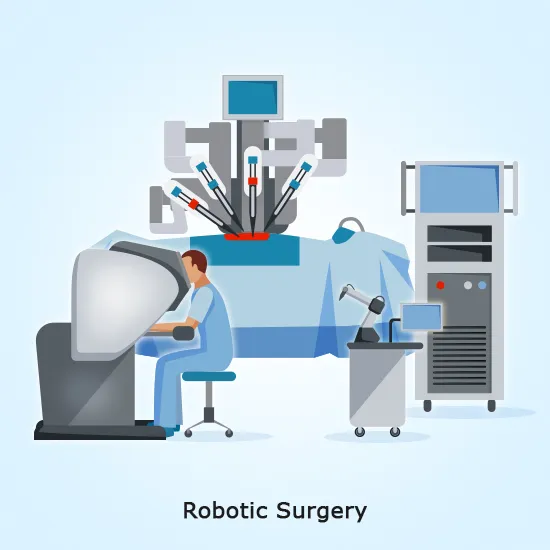 Robotic Surgery: Robotic surgery is an advanced form of minimally invasive surgery that uses robotic systems to assist in surgical procedures. It’s increasingly being used for liver cancer treatment, especially for tumors that are in difficult-to-reach locations or when precision is critical. The robotic system provides surgeons with enhanced dexterity, precision, and control, and offers a three-dimensional, high-definition view of the surgical field.
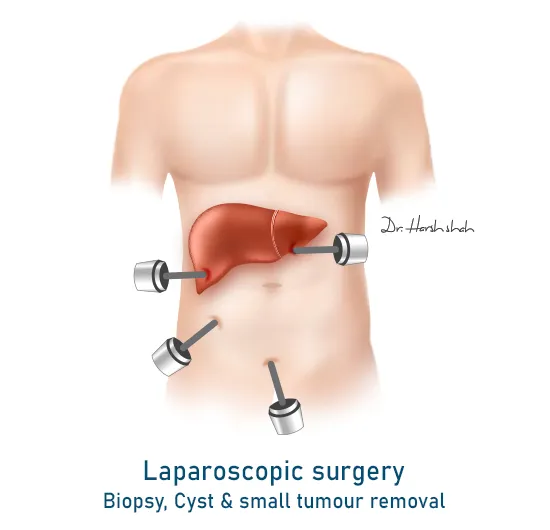 Laparoscopic Surgery: This is a minimally invasive surgical technique where small incisions are made, and tools along with a camera are inserted to perform the surgery. It’s used for removing smaller tumors in the liver and is beneficial because it generally leads to shorter hospital stays, less pain, and quicker recovery compared to open surgery.

Major Liver Resections: This involves removing a large portion of the liver, typically one of the larger lobes. This type of surgery is considered when the tumor is large or when it involves major blood vessels of the liver. The remaining liver tissue must be healthy enough to function post-operation, as the liver has the ability to regenerate.

Minor Liver Resections: This surgery involves removing smaller, less extensive sections of the liver. It’s used for smaller tumors that are well-circumscribed and are located in parts of the liver that make them easier to remove. Like major resections, this also relies on the liver’s ability to regenerate.

RFA (Radiofrequency Ablation): RFA uses high-frequency electrical currents to destroy cancer cells, typically through a needle inserted directly into the tumor. It is most effective for small or early-stage tumors and can be an option for patients who might not be candidates for surgery. This method is less invasive and can sometimes be done without staying in the hospital.
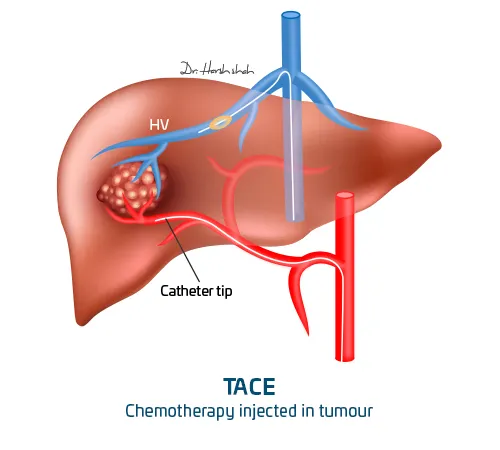
TACE (Transarterial Chemoembolization): This is a targeted therapy used primarily for larger tumors or when surgery is not an option. TACE delivers chemotherapy directly to the liver tumor and blocks its blood supply. The chemotherapy is injected through a catheter placed in the artery supplying the tumor, and an embolic agent is then used to block the artery. This starves the tumor of nutrients and oxygen while confining the chemotherapy to the tumor, minimizing systemic effects.
Success Stories
https://youtu.be/iTdwLOtoyi0
Watch More
Happy Patients
Very satisfying experience from Dr harsh and all team.The diagnosis treatment and service are excellent.Dr harsh Shah is best colon cancer specialist and liver cancer surgeon in ahmedabad. I am thankful to you sir.

Lalita Chhipa
Patient
A Gem of a Dr, very polite, humble, saviour , Perfect diagnosis and guidance with utmost care and medication.
Malini Shelat
Patient
Dr harsh shah is good doctor . Had done surgery for abdominal tumour .thank you so much.
Narendra Bhati
Patient
Robotic Cancer Surgery in Ahmedabad

5/5 based on 123 reviews
★★★★★ 5/5
Read More

Surgical Videos & Photographs
Explore surgical videos & photographs with caution. Please be advised that viewer discretion is recommended.
Watch Videos
Photographs
Watch Videos
See Photographs
Key Benefits of Robotic Surgery for Liver Cancer
-
Robotic surgery allows for extremely precise operations, reducing the risk of damaging surrounding healthy tissue.
-
Patients often experience significantly less pain post-operation compared to traditional surgery.
-
The technique uses smaller cuts, leading to less scarring.
-
Patients generally recover quicker, returning to normal activities sooner.
-
The precision of robotic surgery typically results in less blood loss during the operation.
-
Smaller incisions mean there’s a lower risk of post-surgical infections.
-
Robotic arms can move more freely than human hands, reaching difficult areas.
-
Surgeons can see the surgical site more clearly, thanks to 3D magnification.
-
Patients can often leave the hospital sooner, reducing healthcare costs.

An audio interview of Dr Harsh Shah with Akashwani on the topic of Robotic Surgery.
Tap Below to Listen
An audio interview of Dr Harsh Shah with Akashwani on the topic of Robotic Surgery.
Tap Below to Listen
Why Robotic Liver Cancer Surgery is the best choice for you or your loved ones?
| Types of Surgery | Description | Benefits |
|---|---|---|
| Open Surgery | Involves a large incision to remove the tumor | Allows for direct access and removal of large tumors |
| Laparoscopic Surgery | Uses small incisions and a camera to guide the surgery | Less invasive, with smaller incisions and shorter recovery times |
| Robotic Surgery | Keyhole surgery | Less Pain, Less hospital stay, Early recovery |
| Better View (3D, 10x, HD) | Less blood loss, Better nerve preservation | |
| Flexible Instruments | Enhances Precision, Enhances Accuracy, Early functional recovery |
Types of Robotic Surgeries for Liver Cancer Treatment
https://www.youtube.com/watch?v=9lAYRZ9qz44Robotic surgeries have revolutionized the treatment of liver cancer by providing less invasive methods with improved results. The key robotic procedures for liver cancer include:
1
Liver Tumors and Metastases
Includes HCC, cholangiocarcinoma, and liver metastases, where robotic surgery enhances precision and minimizes tissue damage.
2
Pediatric and Rare Liver Tumors
Focuses on hepatoblastoma and fibrolamellar HCC, using robotic-assisted resection with minimal impact on growth and precision.
3
Aggressive Liver Tumors
Includes surgeries for angiosarcoma, involving complex resections with enhanced control over vascular tumor removal.
Why Choose Dr. Harsh Shah’s Robotic Liver Cancer Surgery?
Go for Dr. Harsh Shah for best skills in robotic cancer surgery, especially with the Da Vinci System, making surgeries accurate and quick to recover from. His advanced Robotic Surgery Centre is available in Ahmedabad, Gujarat.

Expertise
+ Surgery Techniques
+ Advanced Treatment
+ Team of experts
+ Knowledge & Trust
Expertise
Dr. Harsh Shah is a leading robotic cancer surgery specialist in India, particularly known for his pioneering work in liver cancer treatment in Ahmedabad, Gujarat. With over 15+ years of experience, Dr. Shah has established himself as one of the best liver cancer doctor in India, offering comprehensive liver cancer treatments that include the latest in hepatocellular carcinoma treatment and innovative liver tumor treatment options.
Dr. Shah completed his medical education at Maulana Azad Medical College, Delhi & GB Pant Hospital, Delhi. His deep understanding and extensive experience have made him a cornerstone of liver cancer treatment in India, contributing significantly to the liver cancer treatment success rate in the country. Patients seeking treatment for liver cancer find not just a highly skilled surgeon in Dr. Shah but also a compassionate caregiver who is committed to providing the best liver cancer treatment in India.
+ Surgery Techniques
Dr. Shah utilizes state-of-the-art robotic surgery techniques for liver cancer, enhancing precision and improving outcomes. His expertise in robotic surgery has positioned the best liver cancer hospital in India at the forefront of liver cancer best treatment. The use of advanced robotic technology in liver cancer surgery minimizes complications and speeds up recovery, making liver cancer treatment options more effective and less invasive for patients.
As a liver cancer specialist in Ahmedabad, Dr. Shah is dedicated to exploring new liver cancer treatment methods and continually improving liver tumor treatment in India, ensuring that patients have access to the latest and most effective therapies.
+ Advanced Treatment
Dr. Harsh Shah’s innovative approach to liver cancer treatment has truly revolutionized care for patients in Ahmedabad and beyond. His work in liver cancer best hospital in India and his commitment to advancing liver surgery cost in India to be more accessible reflect his dedication to patient care.
Under his guidance, the best hospital for liver cancer treatment in India has become a beacon of hope for those facing 4th stage liver cancer treatment and those seeking the most advanced liver cancer treatments available. Dr. Shah’s role in introducing new liver cancer treatments and improving the liver cancer treatment success rate in India cements his status as a leading liver cancer best doctor in India and expert in liver cancer treatment.
+ Team of experts
Dr. Harsh Shah leads a team of experts renowned for their proficiency in robotic liver cancer surgery in Ahmedabad, setting benchmarks across India. This skilled team, including medical oncologists, radiation oncologists, interventional radiologists, liver oncologists and skilled practitioners, best liver oncologist in India and the best liver surgeon in India, utilizes state-of-the-art robotic technology to offer advanced liver cancer treatment options.
Working together at the best hospital for liver cancer in India, they have achieved remarkable liver cancer treatment success rates, showcasing their expertise in liver tumor treatment and the broader spectrum of liver cancer treatments. Their collaborative efforts have made significant contributions to the field of robotic surgery in India, particularly in robotic surgery for cancer in India, ensuring patients receive the highest standard of care.
+ Knowledge & Trust
Dr. Shah has established a foundation of knowledge & trust in liver cancer treatment through transparent communication about the liver cancer treatment cost in India and detailed explanations of treatment of liver cancer options available. As a respected liver cancer specialist in Ahmedabad and a expert figure in robotic liver cancer surgery, he has earned the trust of patients and their families.
His association with the best liver cancer treatment hospital in India further reinforces this trust, offering patients access to cutting-edge robotic surgery in Ahmedabad. Dr. Shah’s commitment to excellence and patient-centered care has positioned him as the liver cancer best doctor in India, with a reputation built on successful outcomes and personalized treatment for liver cancer, making him a leading figure in robotic liver cancer surgery and a trusted name in liver cancer treatment across India.
Infrastructure
The operation theatre is equipped with latest robotic system, HD laparoscopy system, Laser system, Laminar flow – Hepafilter & many more such technologies.
The Hospital also has 50+ bedded ICU with the latest support systems such as ventilators, dialysis machines & a team of best critical care doctors.
Radilogy department is fully equipped with latest CT Scan & MRI machines. The hospital also has an interventional radiology suit.
Contact Robotic Surgery Centre
We provide a 24*7 emergency care.
+91 63590 11009
+91 63555 64601
Frequently Asked Questions
Is cashless treatment available for liver cancer with robotic surgery?
Yes, cashless treatment is available for liver cancer, providing patients with seamless access to quality care. For further details, visit our Insurance Page.
What Are the Early Warning Signs of Liver Cancer?
Early liver cancer may cause vague symptoms like fatigue, weight loss, abdominal pain, or jaundice. If you notice these signs, especially with risk factors like hepatitis or alcohol use, consult a doctor promptly for screening. Early detection improves treatment outcomes.
Can people recover from liver cancer?
Yes. It is quite possible. The possibility of recovery from liver cancer is influenced by several factors including the stage of the cancer at diagnosis, the effectiveness of the treatment regimen, and individual patient characteristics. Some individuals may achieve remission or experience long-term survival, while others may require continuous management and supportive care to manage their condition.
Is Stage 4 liver cancer curable?
Stage 4 liver cancer, characterized by its advanced nature, is typically challenging to cure. However, available treatments can focus on managing symptoms, decelerating the disease’s progression, and enhancing the patient’s quality of life, thereby providing meaningful benefits.
What food is not good for liver cancer?
Individuals diagnosed with liver cancer are generally recommended to avoid consumption of alcohol, processed and fatty foods, and foods high in salt content. Nutritional guidance should be tailored to each individual’s specific health needs and discussed in detail with a qualified healthcare professional to ensure optimal dietary planning.
Can you live a full life with liver cancer?
Achieving a fulfilling life while living with liver cancer is feasible, especially with early detection, effective treatment, and a comprehensive approach to care. Maintaining a positive outlook, adhering to prescribed treatments, and focusing on overall well-being are essential components for managing the disease.
What is the last stage of liver cancer?
The final stage of liver cancer is identified as stage 4, which signifies advanced or metastatic liver cancer. At this stage, the focus of treatment shifts towards palliative care, aiming to alleviate symptoms and enhance the patient’s quality of life through supportive care measures.
Why do surgeons prefer robotic surgery?
Surgeons favor robotic surgery due to its enhanced precision, flexibility, and control compared to conventional surgical methods. This advanced approach allows for more accurate and less invasive procedures, improving surgical outcomes.
What is the success rate of robotic surgery?
Globally, approximately 1 million minimally invasive surgeries are performed annually using robotic systems, boasting an average success rate of 95%. The largest contribution to this field comes from the tools and accessories utilized in robotic surgeries, with their market value estimated at approximately 3.6 billion US dollars in 2021.
What are the treatment options available for liver cancer?
Surgical Resection: Removing the tumor if it is confined to a specific area.
Liver Transplant: Suitable for patients with early-stage cancer and liver cirrhosis.
Ablation Techniques: Using radiofrequency, microwave, or cryoablation to destroy cancer cells.
Is robotic surgery better than open surgery?
For certain medical conditions, robotic surgery is often considered superior to open surgery. It involves smaller incisions, leading to benefits such as reduced pain, lower risk of infection, and accelerated recovery periods for patients.
Does robotic surgery heal faster?
Patients typically experience faster healing following robotic surgery, attributed to its minimally invasive nature. This advantage results from smaller incisions and minimized tissue disruption, facilitating a quicker recovery process.
What is the recovery time for robotic surgery?
The recovery period following robotic surgery can vary based on the specific type of procedure performed and the individual patient’s condition. However, it is generally shorter than that associated with traditional open surgery, with recovery times often ranging from several days to a few weeks.
What can you eat after robotic surgery?
Post-robotic surgery dietary recommendations include beginning with a light regimen of clear liquids and soft foods. Gradual reintroduction of the patient’s normal diet is advised, under the guidance of their healthcare team. Emphasis should be placed on nutritious and easily digestible foods to support the healing process.
Get in touch
We provide a 24*7 emergency care.
If you have any kind of Uro, Gynec, GI & HPB Cancers related medial emergency, visit Apollo Hospital. An expert doctors is always available & treatment will be provided at once.